

Hey there! I'm a supplier of gate wheels, and I often get asked about what kind of lubricant should be used for gate wheels. Well, in this blog, I'm gonna break it all down for you.
First off, let's understand why lubricating gate wheels is so important. Gate wheels are constantly in motion, and over time, friction can cause wear and tear. This not only shortens the lifespan of the wheels but can also make the gate operation noisy and less smooth. A good lubricant reduces friction, prevents rust and corrosion, and ensures that your gate wheels work like a charm for a long time.
Now, let's talk about the different types of gate wheels out there. We've got Fence Wheels, which are often used in lighter-duty applications like small fences and garden gates. These wheels are usually made of materials like plastic or lightweight metal. Then there are Spring Loaded Gate Wheel, which are designed to adjust to uneven surfaces and provide a more stable support for the gate. And for heavy-duty applications, like large industrial gates or commercial entrances, Heavy Duty Gate Wheel are the way to go. These are built tough with strong metals and can handle a lot of weight.
Types of Lubricants
Grease
Grease is a popular choice for lubricating gate wheels. It's thick and sticky, which means it stays in place better than other lubricants. This is great for gate wheels because it can withstand the constant movement and pressure without dripping off. There are different types of grease, such as lithium-based grease and silicone-based grease.
Lithium-based grease is very common and works well in a wide range of temperatures. It provides good protection against wear and corrosion. It's suitable for most gate wheel applications, whether it's a small residential gate or a large commercial one. However, it can attract dirt and dust over time, so you might need to clean the wheels occasionally.
Silicone-based grease, on the other hand, is more resistant to water and chemicals. It's a good option if your gate is exposed to the elements, like in a coastal area or a place with a lot of rain. It also has a lower coefficient of friction, which means it can make the gate operation even smoother. But it might not be as good as lithium-based grease in high-pressure situations.
Oil
Oil is another option for lubricating gate wheels. It's thinner than grease and can penetrate into small spaces more easily. This makes it a good choice for cleaning and lubricating parts that are hard to reach. There are different types of oil, such as mineral oil and synthetic oil.
Mineral oil is a traditional choice and is relatively inexpensive. It provides basic lubrication and protection against rust. However, it can evaporate over time, especially in high temperatures, so you might need to reapply it more often.
Synthetic oil, on the other hand, is more expensive but offers better performance. It has a higher viscosity index, which means it can maintain its lubricating properties over a wider range of temperatures. It also resists oxidation and breakdown better than mineral oil, so it lasts longer. Synthetic oil is a great choice for heavy-duty gate wheels that are under a lot of stress.
Dry Lubricants
Dry lubricants, like graphite or PTFE (polytetrafluoroethylene), are also used for gate wheels. These lubricants come in a powder or spray form and leave a dry, slippery film on the surface of the wheels. They are great for applications where you don't want a wet or sticky lubricant, like in a clean environment or where there is a risk of attracting dirt.
Graphite is a natural lubricant that is very effective in reducing friction. It's also resistant to high temperatures and can be used in a variety of applications. PTFE, on the other hand, is a synthetic material that has a very low coefficient of friction. It provides excellent lubrication and can withstand a lot of pressure. Dry lubricants are easy to apply and don't require a lot of maintenance, but they might need to be reapplied more frequently than grease or oil.
Choosing the Right Lubricant for Your Gate Wheels
The type of lubricant you choose depends on several factors, such as the type of gate wheels, the environment they are in, and the frequency of use.
If you have Fence Wheels or other lightweight gate wheels, a light oil or a silicone-based grease might be sufficient. These lubricants will provide enough protection and make the gate operation smooth without adding too much weight or attracting a lot of dirt.
For Spring Loaded Gate Wheel, a lithium-based grease is a good choice. The grease will stay in place and provide the necessary lubrication and protection for the moving parts of the spring mechanism.
If you have Heavy Duty Gate Wheel, a synthetic oil or a high-quality lithium-based grease is recommended. These lubricants can handle the high pressure and heavy loads that these wheels are subjected to.
In terms of the environment, if your gate is in a wet or humid area, a silicone-based grease or a dry lubricant might be better because they are more resistant to water and corrosion. If your gate is in a dirty or dusty environment, a dry lubricant or a grease that doesn't attract dirt easily would be a good option.
How to Apply Lubricant
Applying lubricant to gate wheels is a relatively simple process, but it's important to do it correctly to get the best results.
First, make sure the wheels are clean. Use a brush or a cloth to remove any dirt, dust, or old lubricant from the surface of the wheels. This will ensure that the new lubricant can adhere properly and provide better protection

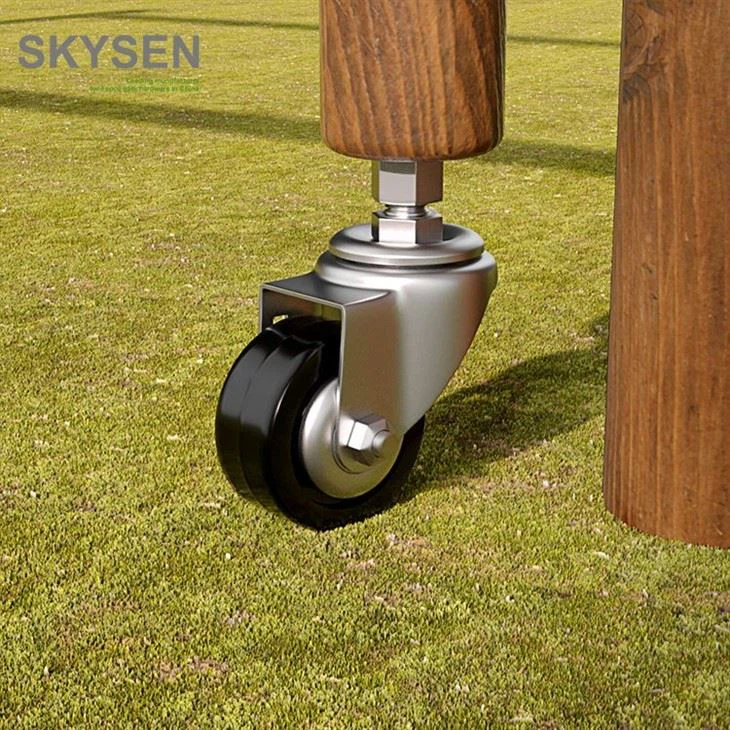
If you're using grease, you can apply it with a grease gun or a small spatula. Apply a thin layer of grease to the bearing surfaces and the moving parts of the wheels. Make sure to cover all the areas that need lubrication.
If you're using oil, you can pour it into a small container and use a brush or a dropper to apply it to the wheels. Make sure to apply the oil evenly and let it penetrate into the parts.
If you're using a dry lubricant, follow the instructions on the product. Usually, you just need to spray or dust the lubricant onto the wheels and then wipe off any excess.
Conclusion
Choosing the right lubricant for your gate wheels is crucial for their performance and longevity. Whether you have Fence Wheels, Spring Loaded Gate Wheel, or Heavy Duty Gate Wheel, there's a lubricant out there that's perfect for your needs. Consider the type of wheels, the environment, and the frequency of use when making your decision. And remember, proper application and maintenance are just as important as choosing the right lubricant.
If you're in the market for high-quality gate wheels or need more advice on lubrication, don't hesitate to reach out. We're here to help you keep your gates running smoothly.
References
- "Handbook of Lubrication and Tribology, Volume I: Application and Maintenance" by Bhushan, Bharat
- "Lubrication Fundamentals" by Booser, E. R.
