

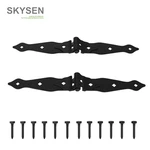
Chain Link Fence Hardware
Skysen: a Professional Chain Link Fence Hardware Manufacturer
Our company began to develop export business in 2012, and its products are exported to countries around the world, mainly the United States and Europe.
Variety of Products
We can manufacture fence gate hardware, plastic decorations, barn door hardware, and also provide OEM/ODM products to customers. These products are widely used in doors, windows, doors, fences, garages and other places.
Large Production Scale
Our company currently has more than 100 employees, covers an area of more than 6,000 square meters, and has annual export sales of US$20 million, growing at an annual rate of 10%. We mainly produce hardware and plastic products, combining domestic sales with exports.
Advanced Production Equipment
Our production workshop is equipped with advanced production equipment such as punches, milling machines, shears, bending machines, robotic arm welding machines, laser CNC lathes, CNC lathes, wire cutting machines, grinders, polishing machines, etc.
Strict Quality Standards
In terms of quality assurance, we use a full set of industry-leading testing equipment to ensure product quality and good reputation. In addition, our company has passed ISO:9001 professional testing and has a number of patented technologies.


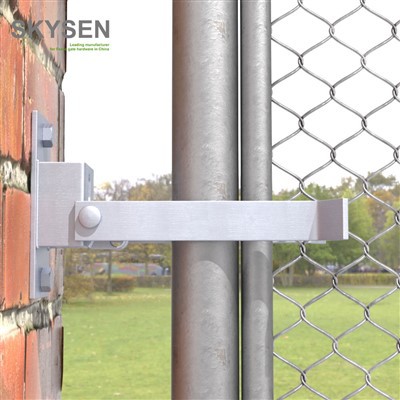

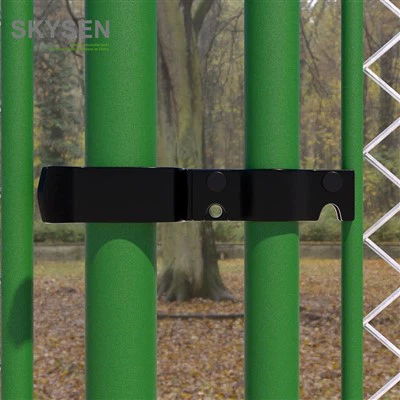


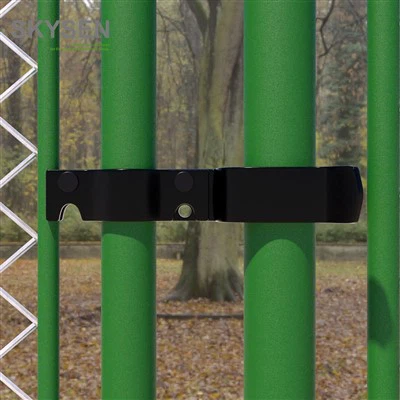

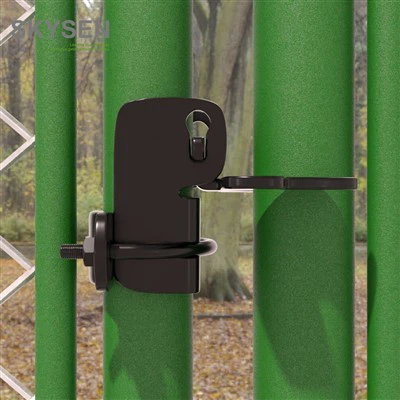
Chain Link Fence Hardware is a high quality, durable chain link fence hardware specially designed for installing and maintaining chain link fences. The products include various specifications of chains, connectors, locks, handles, supports and fixings, etc. Its materials include stainless steel, welding, electroplating and hot-dip galvanizing, etc., which can ensure high strength and long life of the product.
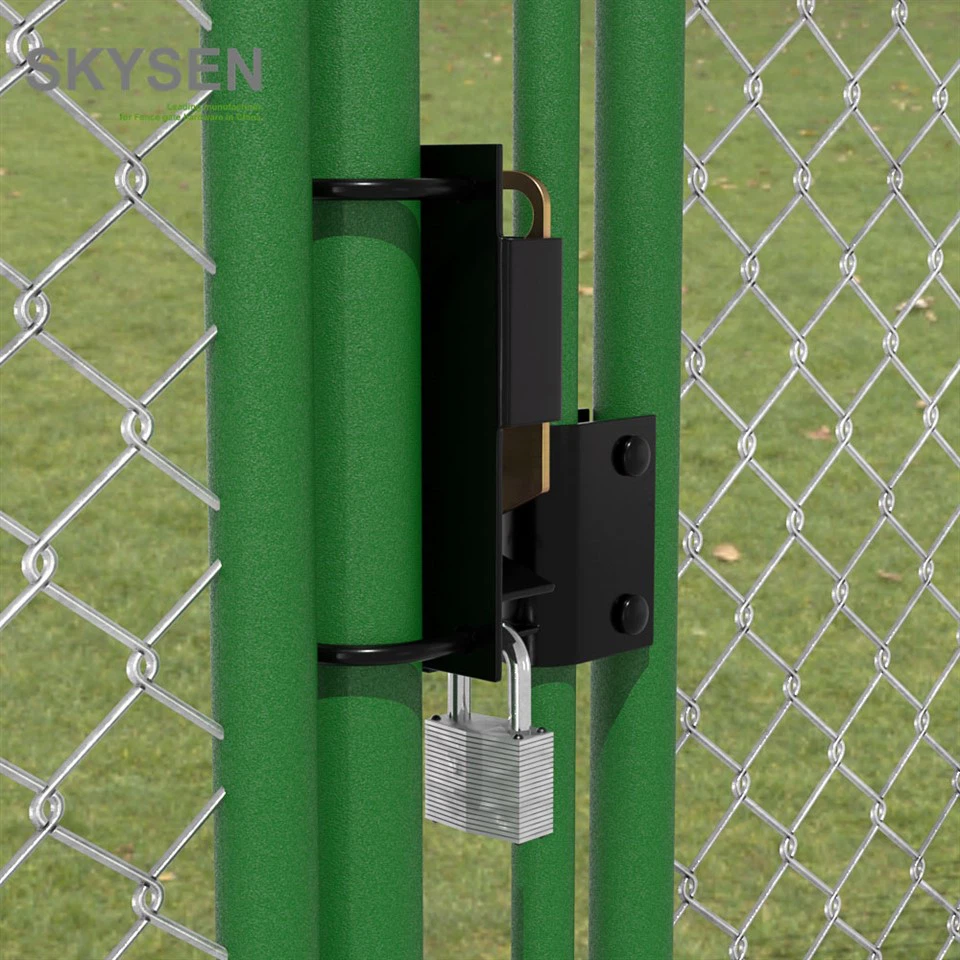
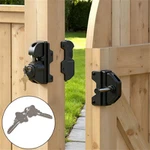
Chain link fence hardware is a collection of fork latches, pad locks, and other latches/locks designed to be installed on a chain link fence door frame or door jamb. These products are usually made of metal, such as carbon steel, stainless steel, aluminum, etc. Some models are hot-dip galvanized for even greater corrosion resistance. Manufacturers use additional coatings, extrusion or melt-bonding techniques to give these hardware a different colored appearance.
Different Types of Chain Link Fence Hardware
Depending on the design and material of the gate, there are several types of latches to choose from. Common materials for gate latches are iron, stainless steel, aluminum, bronze, and brass. They can either be modern and contemporary in style or have a traditional, rustic appearance.Typically, latches are either one-way, which means they can only be opened from the inside, or two-way, in which they can also be opened from the outside. In addition, some latches are lockable with a key or a padlock. Common types of fence gate latches include:
The most common type of latch is a gravity latch, also known as a fingertip release latch. It has a simple self-closing mechanism that uses the weight of the closing gate to secure the arm within a metal catch. These types of latches are usually installed on the inside of the gate and are generally one-way. To open the gate, you simply need to lift the latch with your finger. If you want to be able to open the gate from the outside, two-way options are available, and most can be locked using a padlock.
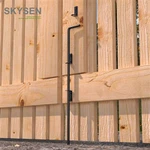
One of the least complex latches is a simple bolt. Bolts are very easy to install and can be mounted on either side of the gate. This type of latch operates by sliding a metal rod into a catch on the gatepost or frame. One of the main advantages of a deadbolt is that it is available in a wide range of designs and sizes. This makes it a good choice for large, heavy gates that need a strong latch. If necessary, additional bolts can be added to the bottom of a gate for security.
If you need to open the gate from both the outside and the inside. These are mounted on both sides of the gate and can often be locked from the inside. Thumb latches are generally traditional in style and are commonly made from black iron or bronze. From the outside, there is a decorative handle with a small, thumb-activated push button that lifts the latch arm from its cradle. If the latch is lockable, it will usually take a key, similar to a traditional door handle.
Lever latches are very similar in design to a ring latch, except instead of a ring, they have either a handle or a lever that must be lifted. There are many different styles and materials of lever latches to suit modern or traditional fence designs. Lever latches offer several benefits. They are usually straightforward for adults to use but prove to be more difficult for children and pets to open. Additionally, they are highly versatile and can be installed on both in- and out-swinging gates.
If you have a fence and gate made from chainlinks, it recommends using a butterfly latch. These are usually made from galvanized steel and are attached directly to the framework of a gate or fence.They have a very simple, self-closing mechanism that allows the gate to open both outward and inward. However, these latches aren't usually lockable, and care should be taken to ensure children don't trap their fingers in the moving parts.
Hinges play a vital role in the movement, or opening and closing of doors and gates. They facilitate easy movement. Hinges can be of different types, which are used for various types of doors and gates. One of the important functions that these components is that it attaches the gates firmly to the frame, thus providing a good security. For this purpose, they are made from heavy duty material.This increases the overall strength of these hinges and makes them extra sturdy. Common fence gate hinges include the following types:
The most common type of hinge is the butt hinge because it is a robust and reliable hardware component. Also called a mortise hinge, it consists of two rectangular plates, or "leaves," joined together by a central pin. One leaf is attached to the stationary frame, while the other is secured to the gate. The standard size for a gate is 4 ½ inches with a thickness ranging from 3 to 3 ½ millimeters. The ball bearing sits between the knuckles and functions as a cushion, effectively diminishing friction. Most projects will require at least two hinges.
The standard piano hinge size for gates and doors is 72 inches, making them an excellent option for tall gates due to their construction. These hinges feature a central pin and leaves of equal measure that extend along the entire length of a gate. These hinges distribute weight along their full length evenly, which eliminates stress on specific points. Because of their length, piano hinges provide outstanding stability to gates, reducing the risk of sagging or warping over time and ensuring the gate remains level and fully functional. Thanks to their continuous design, piano hinges offer frictionless movement, resulting in a gate that opens and closes quietly and with minimal effort.
A barrel hinge, sometimes referred to as a barrel bolt hinge, has a cylindrical barrel with a pin that runs through the center. The barrel is attached to one part of the gate (typically the gate post), while the pin connects to the gate. When the gate is closed, the pin fits snugly into the barrel, creating a pivot point that allows the gate to swing open and close. The hinge size for your project depends on the gate's weight and width—standard size ranges from 5 to 9 inches. Barrel hinges provide enhanced security because they are challenging to tamper with or remove when the gate is closed.
A strap hinge is a type of hinge that consists of a long, flat strap or plate attached to a gate with a pintle that mounts on the gatepost or frame. Strap hinges are used for decorative and functional purposes and often appear on barn-style gates. Typically, the longer the strap, the more weight the hinge can hold. For example, two 18-inch strap hinges can hold up to 300 pounds. Strap hinges are known for their decorative and rustic appearance, making them a popular choice for gates where aesthetics matter. Heavy-duty options can support substantial gate weights depending on the hinge's size and construction. When properly installed, strap hinges can provide smooth and reliable gate movement.
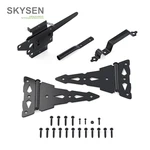
Tee hinges, sometimes referred to as T-hinges, blend the characteristics of both strap hinges and butt hinges. They feature a rectangular-shaped knuckle that securely attaches to the gatepost and a tapered strap that provides additional stability by affixing to the gate itself. You will need two for adequate support. Tee hinges are surface mounted and don't require specialized tools, making them reasonably easy to install, even for DIY enthusiasts. They are often more budget-friendly than other hinge types, ranging from $5 to $75, making them an economical choice for many gate projects. When installed correctly, tee hinges can provide reliable gate operation, swinging smoothly and securely.
Butterfly hinges are designed to be seen and have leafs that have the shape of butterfly wings. They are flat surface mounted, with one butterfly wing attached to the door and the other attached to the door frame. They are mainly used on cabinets or ornamental boxes.
Spring-loaded butt hinges have a spring in the knuckles or barrel that forces a door shut. They are used in doors that need to remain closed. While the door can swing both ways, the spring always closes the door once it is in the middle.
Block hinges are extremely strong hinges bolted or welded to fences, doors, and frames. They are similar to bullet hinges but without the bullet shape and have mounting holes. Block hinges do not have leafs, providing a finished, polished appearance. They take up little room and provide a smooth, sturdy rotation.
Chain Link Fence Hardware Specifications
|
Model No: |
GH1295 |
|
Product Name: |
Self locking chain link gate latch |
|
Material: |
Carbon steel/SS304 |
|
Fit for: |
Wooden gate /vinyl gate |
Features of SS304 Chain Link Fence Hardware
SS304 chain link fence hardware has superior rust resistance compared to galvanized steel, bronze or brass. Compared to traditional rusting of other metals, stainless steel's corrosion resistance is unpredictable and localized. Small holes can penetrate the thickness of the metal, causing cracks and leaks. As we all know, SS304 has high corrosion resistance in air environment.
SS304 chain link fence hardware is visible and helps enhance the aesthetics of your door or gate. The surface treatment of stainless steel hinges can easily maintain a high level of shine. Stainless steel is preferred for pharmaceutical, food, kitchen and medical applications because it is easy to clean.
SS304 chain link fence hardware is resistant to extreme heat and cold. Stainless steel is strong and can withstand scaling even at extremely high temperatures. SS304 chain link fence hardware can still maintain its toughness at low temperatures. As a result, these hardware maintain excellent durability in a variety of outdoor weather conditions.
Stainless steel's strength-to-weight ratio allows it to be used in thinner thicknesses than traditional metals, a property that can reduce costs. Stainless steel can be molded, cut, forged, welded and machined as easily as most traditional steels. Although stainless steel hinges are generally more expensive than other materials, they have a longer life cycle and come in a variety of styles, shapes and patterns to suit numerous applications.
8 Methods How To Lock Chain Link Fence Gate
Choose the Right Lock
Before locking your chain link fence gate, it’s important to choose the right lock that is suitable for your needs. There are several types of locks available, including padlocks, combination locks, keyless locks, and more. Choose a lock that is weather-resistant, durable, and secure. To ensure maximum security, it is recommended to choose a high-security lock. To deter vandalism and break-ins, consider installing a lock that is also tamper-evident. Although chain link gates are not as secure as other types of fences, adding a lock can go a long way in securing your property. Make sure to always keep the key in a secure place and never leave it near the gate.
Install a Latch
A latch is an essential component of any chain link fence gate locking system. It keeps the gate securely closed and prevents it from swinging open. Install a latch on the inside of the gate so it’s not easily accessible from the outside. When installing a latch, use self-tapping screws and make sure that the screws are long enough to securely attach the latch plate.To add extra security, you can also install a latch guard to prevent tampering with the latch from outside. To properly secure a chain link fence gate with a latch, use an appropriate fastener such as screws or lag bolts. Make sure that the hardware is strong enough to withstand the weight of the gate.
Install a Deadbolt Lock
A deadbolt lock is an additional layer of security that can be installed on the gate. It’s a type of lock that requires a key to operate and is difficult to pick. Install the deadbolt lock on the inside of the gate to prevent tampering. Although this type of lock requires a key, it is not recommended to use the same key for both locks. If desired, you can purchase a deadbolt lock with a combination, so the gate can be opened without using a key. Make sure to keep the combination or key safe and secure in order to keep the gate protected.
Install a Padlock
A padlock is a common type of lock that can be used to secure a chain link fence gate. It’s easy to use and provides a good level of security. Install the padlock on the latch to secure the gate. Make sure to use a sturdy padlock with a heavy-duty shackle and an anti-theft lock cylinder. To ensure the padlock is secure, use a hardened steel shackle and a corrosion-resistant lock cylinder. When not in use, store the padlock in a secure place so that it can’t be stolen.
Install a Hasp
A hasp is a metal plate that can be installed on the gate to provide a mounting point for a padlock. It’s an additional layer of security that makes it more difficult to break into the gate. Install the hasp on the gate and attach the padlock to it. Make sure the padlock is securely attached to the hasp and that it is easily accessible. This will make it easier for you to lock the gate whenever necessary. To ensure that the hasp is securely attached to the gate, use screws or bolts that are long enough and strong enough to hold it in place. After the hasp is secured, test it out to make sure that it is functioning properly.
Install a Spring-Loaded Latch
A spring-loaded latch is a type of latch that automatically latches when the gate is closed. It’s an easy-to-use option that provides a good level of security. Install the spring-loaded latch on the gate to secure it. Start by drilling two holes in the gate post, then insert the latch into the post and secure it with screws. Once installed, the spring-loaded latch will automatically close the gate and lock it when you’re done.
Use a Chain and Padlock
If you don’t want to install a latch or hasp, you can use a chain and padlock to secure the gate. Simply loop the chain through the gate and around the fence post and attach the padlock to the chain. This option is not as secure as a latch or hasp, but it can be quickly and easily done. Make sure to use a heavy-duty chain and high-quality padlock to ensure maximum security.
Add a Gate Alarm
A gate alarm is an additional security measure that can be added to the gate. It sounds an alarm if the gate is opened without authorization, alerting you to the intrusion. Install the gate alarm on the gate to provide an extra layer of security. The alarm can be wired directly into your home’s security system, linked to a mobile app, or even connected to an external monitoring service. Make sure the alarm is secure and cannot be disabled easily.
Maintaining and Replacing Chain Link Fence Hardware
To ensure the longevity and optimal performance of chain link fence hardware, it is important to maintain it regularly and replace it when signs of wear are seen. Here is some maintenance related information:
Regular Maintenance
Regular maintenance of chain link fence hardware is critical to its optimal performance and longevity. It is recommended that chain link fence hardware be cleaned regularly and lubricated with heavy-duty grease or spray-on white lithium grease every six months to a year, depending on usage. Cleaning your chain link fence hardware regularly will help avoid the buildup of dirt and debris that can lead to damage. Lubricating chain link fence hardware helps reduce friction and minimize wear on the hinges, extending their lifespan. After lubrication, it is important to wipe away any excess grease with a clean cloth or paper towel.
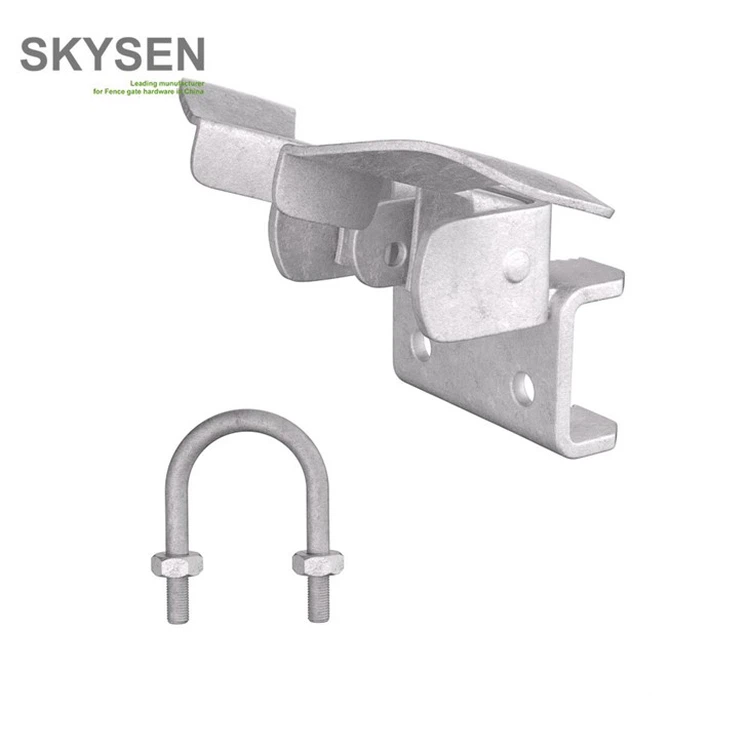

Signs of Wear and Tear
Signs of wear on chain link fence hardware may include rust, squeaking, and difficulty opening or closing the gate. Regularly inspecting and lubricating chain link fence hardware can help avoid wear and extend the life of your hinges. If you notice any of these signs, it may be time to consider replacing this hardware to ensure the continued functionality and security of your door.
Certifications
Our company has obtained the following certificates:


Our Factory


FAQ
Q: How to measure fence brackets in chain link fence?
Q: Where are the chain link fence support straps located on the fence?
Q: How do chain link support straps work?
Q: How do I attach support straps to an existing chain link fence?
Q: How does a saddle clamp work?
Q: How high should a fence latch be?
Q: How to adjust hinge tension?
Q: Should I support the gate weight while installing the hinges?
Q: Is the holding weight the same as the closing weight?
Q: The key in gravity latch is stuck or not operating correctly?
Q: How does a butterfly latch work?
Q: How do you lock a butterfly gate latch?
Q: What is a butterfly latch?
Q: Where should hinges be placed on a gate?
Q: What type of hinge is used on gates?
Q: How do you measure spring hinges?
Q: How to secure a chain link fence gate?
Q: Can I add a lock to my fence gate?