

Test Your Gate's Sag and Swing
A spring for a gate won't work effectively if the gate itself isn't sitting properly. Fix sagging gates and ensure they smoothly swing before you set up the spring.
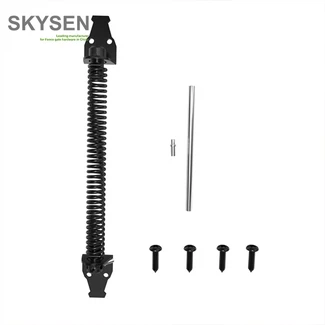
Mark Screw Location
Deft drill work prevents sloppy screw settings that can affect the spring's performance or damage the mechanism or your gate.
With the gate closed, check the spring position and mark screw holes before digging out your drill. Always check the manufacturer's instructions, as gate spring positions vary depending on the model. There are usually photos to illustrate the correct position. However, standard guidance is as follows:
The spring is typically angled going to the right on the hinge side of the gate.
The top of the spring is often labeled so and will have the tightening tension knob there.
Mark the screw holes for the bracket that attaches to the gate (on the hinge side) and for the one that connects to the gate post, with the spring positioned as vertically as possible.
Right-hand opening gates usually have the top bracket attached to the gate post with the bottom bracket on the gate, and left-hand opening gates are the other way around.

rill Holes and Fasten Screws
Drill pilot holes through the post and gate on the marked spots. Pilot holes help prevent gate or post wood from splitting or cracking when you put in the screws and allow you to more accurately and efficiently apply the screws. Using a 9/64-inch or 7/74-inch drill bit usually works. Drill the four provided screws securely into place.
Note: If you're attaching the spring to a thick metal gate, you might have to substitute the screws in the kit for strong self-tapping screws that create a hole and thread simultaneously. When you have a brick gate post, you'll need to insert wall plugs into the drilled holes to anchor the screws into the masonry securely.
Adjust Spring Tension
If you don't get the tension just right, your gate will either not open freely or will continue to swing. Close the gate and use the wrench supplied as part of the kit (sometimes called the tension rod or bar) to adjust the tension via the mechanism at the top of the spring.
The process for adjusting the spring tension varies, so always check the manufacturer's instructions for details on using the tools and which direction to turn the wrench or bar to increase or decrease torque. The kit often includes a peg; release it to increase or loosen tension and then replace it to lock in the desired tension.
Typically, you shouldn't turn the wrench more than three increments clockwise at a time to prevent over- or under-tightening that can damage the spring or gate.
Test Mechanism and Readjust as Necessary
You might get lucky and have the perfect amount of spring tension on installation. However, there is often a bit of trial and error to hit the preferred amount.
You want the tension to be tight enough to snap shut the gate and keep it firmly closed but not so tight that it slams shut violently, remains slightly ajar, or is stiff to open.


