

Gate hinges may seem like a small detail, but they are the backbone of any gate or Gate system. Even the best-quality hinge will fail prematurely if installed incorrectly - leading to excess noise, Gate sagging, poor alignment, or costly maintenance. In this guide, we'll walk you through the proper techniques for installing Gate hinges and show you how to get a free quote from us for your next project.

Why Proper Hinge Installation Matters
Incorrect hinge installation can cause:
A door that sticks or fails to close fully, increasing wear.
Misalignment, which puts strain on the hinge and mounting frame.
Faster corrosion or loosening of fasteners over time.
By installing the hinges correctly, you gain benefits such as:
Smooth, reliable door operation for years.
Reduced maintenance and repair costs.
Enhanced safety and better aesthetics for your fence/gate area.
👉 Ready to upgrade your gate hardware? Get your free quote now!
Gate hinges are a common component that serves to secure the Gate. Even the best part requires installation skills, sometimes due to improper installation skills, it can cause blockage when opening and closing the Gate. So what are the installation skills for Gate hinges?

1. Minimum clearance
Gap refers to the gap on the side of the Gate when it is opened, which is determined by the thickness of the Gate and the hinge model. The type of hinge model required can be compared at different angles.
2. Minimum gap of half cover Gate
When two Gates need to use a side panel, the total gap required is twice the minimum gap, making it convenient for both Gates to open simultaneously.
3. C distance
The meaning of C distance refers to the distance between the Gate edge and the rubber cup hole. Generally, the maximum size of the hinge is C ruler, and depending on different models, the wider the C distance, the smaller the gap.
4. Gate coverage distance
The Gate coverage distance refers to the distance that covers the side panel.
5. Gap
Gap refers to the distance between the outer edge of the frame and the outer edge of the cabinet when fully covered. Gap refers to the distance between the outer edge of the cabinet and the outer edge of the cabinet when fully covered; The distance between two Gates in the case of a half cover; In the case of an inner Gate, the gap refers to the distance from the outer edge of the Gate to the inner edge of the cabinet side panel.
Recommended Hinge Models
We offer industry-leading hinge models built for performance:

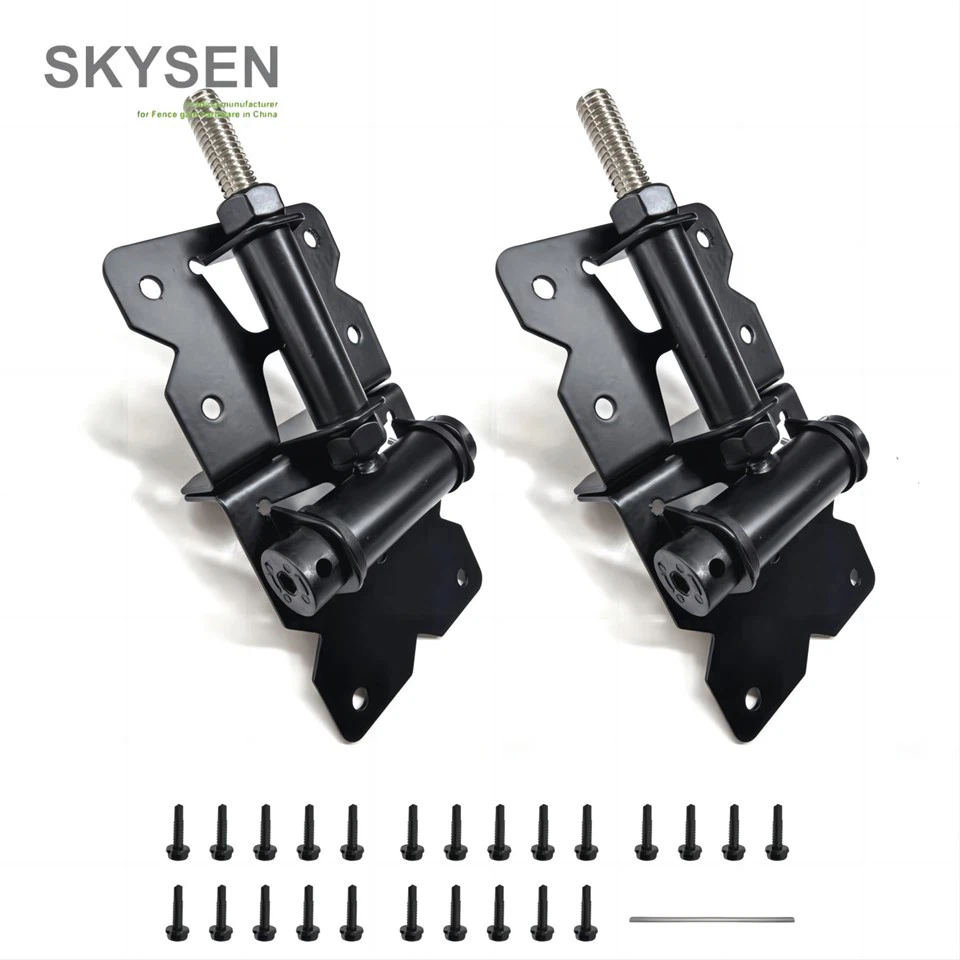

👉 Want bulk pricing or OEM branding? Request your custom quote now!
Real-World Case Studies
Residential Pool Gate, California: Our team installed VH-300 hinges on a vinyl gate around a pool area. The customer reported, "The door now closes smoothly every time - we're so much safer knowing the gate won't stay open."
Commercial Yard Gate, Australia: We supplied and guided the installer remotely for a heavy-duty swing gate; the client noted reduced maintenance calls by 60% within the first year.
FAQ
Q1: Can I use the same hinge model for both metal and vinyl gates?
A1: It depends on the hinge rating. Some hinges are designed specifically for vinyl or wood and others for metal. Always check the load and material compatibility.
Q2: How often should I maintain or adjust the hinge?
A2: We recommend a check every 3-6 months to ensure screws are tight and pins are clean. If door operation changes, adjust tension or realign as needed.
Q3: What warranty do your hinges have?
A3: Our heavy-duty models come with a 10-year anti-rust warranty and full installation support.
Q4: Do you offer installation service or only shipping of parts?
A4: We offer both. We can ship hinge kits to you, or coordinate with our installation partners for full service. Contact us to check your regional options.


